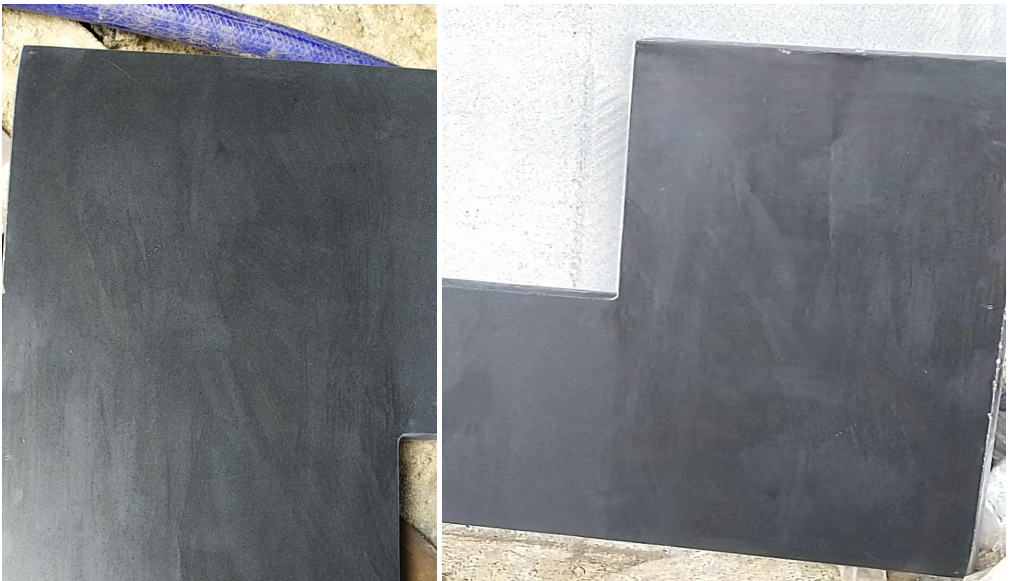
Black granite can create a deep, elegant surface, but the right care method depends on the stone’s porosity, finish, installation environment and expected use. A sealer may improve stain resistance, but it does not replace proper cleaning or correct installation.
Honed and dark granite surfaces can be particularly sensitive to application marks. Uneven absorption, residue or excess sealer may leave visible patches, haze or a change in sheen. This is why a small, representative test area should be completed before treating the full installation.
A practical sealing process starts with a clean, dry surface. Remove dust, construction residue, oil and old treatment where appropriate. Follow the product manufacturer’s instructions for drying time, coverage and ventilation. Apply a compatible impregnating sealer evenly, allow the recommended dwell time and remove excess product before it dries on the surface.
Do not assume that one sealer suits every black granite product. Check the technical data sheet and confirm compatibility with the specific stone and finish. Polished, honed, flamed and brushed surfaces can behave differently. For exterior paving, wet areas, kitchens and commercial floors, exposure and maintenance frequency should also be considered.
If the result is uneven or the surface remains vulnerable to staining, stop and seek advice from the sealer manufacturer or a qualified stone-care professional. For new projects, ask the fabricator or supplier for the stone’s care recommendations before installation.
This guide is general maintenance information. Always test first and follow the instructions for the selected sealing product.